Tel:
Tel: E-Mail:
 English
 Chinese
 한국어
한국어
 Español




News
Key Terms: Kv vs Cv
| Term | Definition | Unit |
|---|---|---|
| Kv | Flow of water (m³/h) at 1 bar pressure drop, 15°C | m³/h |
| Cv | Flow of water (US gal/min) at 1 psi pressure drop | US gal/min |
Conversion: Cv = Kv × 1.16 | Kv = Cv × 0.86
Standard Kv/Cv Values by Valve Size
| Port Size | DN | Kv (m³/h) | Cv |
|---|---|---|---|
| 3/8" | 10 | 3.5 | 4.0 |
| 1/2" | 15 | 6.0 | 7.0 |
| 3/4" | 20 | 9.0 | 10.5 |
| 1" | 25 | 14.0 | 16.3 |
| 1-1/4" | 32 | 22.0 | 25.6 |
| 1-1/2" | 40 | 30.0 | 34.9 |
| 2" | 50 | 48.0 | 55.8 |
| 2-1/2" | 65 | 75.0 | 87.2 |
| 3" | 80 | 110.0 | 128.0 |
| 4" | 100 | 180.0 | 209.0 |
How to Calculate Required Valve Size
Step 1: Gather your data
Required flow rate (Q)
Allowable pressure drop (ΔP)
Media density (for gases and steam)
Step 2: Use the basic formula (liquids)
Kv = Q / √ΔP
Where:
Q = m³/h
ΔP = pressure drop in bar
Example:
Required flow: 10 m³/h water
Allowable pressure drop: 0.5 bar
Kv = 10 / √0.5 = 10 / 0.707 = 14.1
Result: Select DN25 (Kv = 14.0) – perfect match.
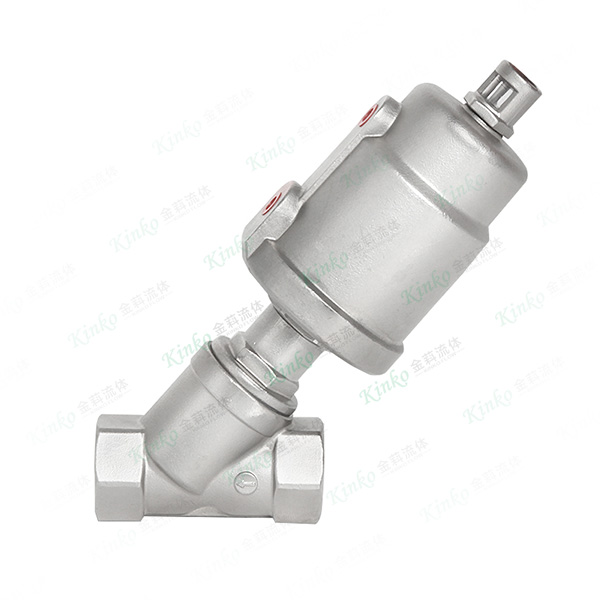
Quick Selection Table (Liquids)
| Required Flow (m³/h) | Allowable ΔP 0.2 bar | Allowable ΔP 0.5 bar | Recommended DN |
|---|---|---|---|
| 1–3 | Kv 2.2–6.7 | Kv 1.4–4.2 | DN10 or DN15 |
| 3–8 | Kv 6.7–17.9 | Kv 4.2–11.3 | DN20 or DN25 |
| 8–15 | Kv 17.9–33.5 | Kv 11.3–21.2 | DN25 or DN32 |
| 15–25 | Kv 33.5–55.9 | Kv 21.2–35.4 | DN40 |
| 25–45 | Kv 55.9–100.6 | Kv 35.4–63.6 | DN50 |
| 45–70 | Kv 100.6–156.5 | Kv 63.6–99.0 | DN65 |
| 70–100 | Kv 156.5–223.6 | Kv 99.0–141.4 | DN80 |
Pressure Drop Limits by Media
| Media | Max Recommended ΔP | Risk if Exceeded |
|---|---|---|
| Water (clean) | 0.5–1.0 bar | Cavitation, noise |
| Steam | 0.3–0.5 bar | Erosion, water hammer |
| Air / gas | 0.2–0.3 bar | Excessive energy loss |
| Oil (viscous) | 0.5–1.5 bar | Flow may stall |
| Chemicals | 0.3–0.8 bar | Depends on fluid |
Effect of Viscosity on Flow
Higher viscosity = lower effective Kv.
| Viscosity (cSt) | Correction Factor |
|---|---|
| Water (1 cSt) | 1.0 |
| 50 cSt (light oil) | 0.9 |
| 100 cSt | 0.8 |
| 300 cSt | 0.6 |
| 600 cSt (max) | 0.5 |
Example: DN25 valve (Kv 14) with 100 cSt oil → Effective Kv = 14 × 0.8 = 11.2
Common Sizing Mistakes
| Mistake | Consequence |
|---|---|
| Undersizing | High pressure drop, cavitation, noise, reduced flow |
| Oversizing | Higher cost, slow response, poor throttling control |
| Ignoring viscosity | Actual flow much lower than calculated |
| Using pipe size only | Valve may need to be smaller or larger than pipe |
| Ignoring pressure drop budget | System pressure may drop below requirements |
Rule of thumb: Valve Kv should be 20–30% higher than calculated minimum to allow for aging and fouling.
Flow Rate vs Cycle Life
| Flow Rate (Velocity) | Effect on Valve |
|---|---|
| Low (<1 m/s) | Minimal wear, longest life |
| Medium (1–3 m/s) | Normal wear, expected life |
| High (3–5 m/s) | Increased seat and disc wear |
| Very high (>5 m/s) | Rapid erosion, short life |
Solution for high velocity: Oversize the valve by one size to reduce velocity.
Quick Reference: Pipe Size vs Valve Size
| Pipe Size | Standard Valve DN | When to Use One Size Smaller | When to Use One Size Larger |
|---|---|---|---|
| 1/2" | DN15 | Low flow only | Never |
| 1" | DN25 | Air/gas at high pressure | Viscous fluids |
| 2" | DN50 | Clean water, low ΔP | Slurries, high velocity |
| 3" | DN80 | General use | Very viscous media |
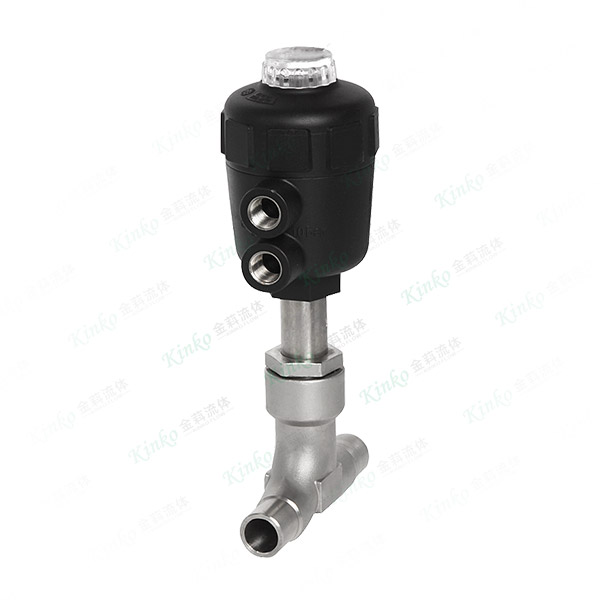
Kinko Sizing Support
Kinko provides:
Kv/Cv datasheets for all valve sizes
Online sizing tool for liquids, gases, and steam
Engineering support for complex applications
Ivan (Mobile:+86-18968769287)
WhatsApp:+86-13579991606
Wechat:+86-18968769287
Website: www.kinko-flow.com
ZHEJIANG KINKO FLUID EQUIPMENT CO.,LTD

 info@kinko-flow.com
 +86-133 5611 9006