Tel:
Tel: E-Mail:
 English
 Chinese
 한국어
한국어
 Español




News
Two Types of Leakage
| Leak Type | Location | Visible Sign |
|---|---|---|
| Internal | Across the seat (valve closed) | Media flows downstream when valve should be off |
| External | To atmosphere | Drips from body, weep hole, or actuator |
Internal Leakage (Valve Won't Seal)
Cause 1: Worn PTFE Disc
Symptoms: Media passes through when valve is closed. Leakage increases over time.
Solution: Replace PTFE disc (10–15 minutes, in-line).
Cause 2: Debris on Seat
Symptoms: Valve was fine, then suddenly leaks. Intermittent leakage.
Solution: Cycle valve 5–10 times rapidly to dislodge debris. If that fails, install Y-strainer and disassemble to clean.
Cause 3: Incorrect Flow Direction
Symptoms: Leaks from first use. Loud water hammer when closing.
Solution: Reverse valve orientation. Pressure must be above the seat (follow arrow on body).
Cause 4: Low Pilot Pressure (Incomplete Stroke)
Symptoms: Valve "buzzes" or doesn't open fully. Leaks when closed but works when pressure is higher.
Solution: Increase pilot pressure to 4.5–8 bar (65–116 psi).
Cause 5: Damaged Valve Seat (Metal)
Symptoms: New PTFE disc doesn't fix leak. Visible scoring on seat.
Solution: Replace valve body (seat is machined into body, not replaceable).
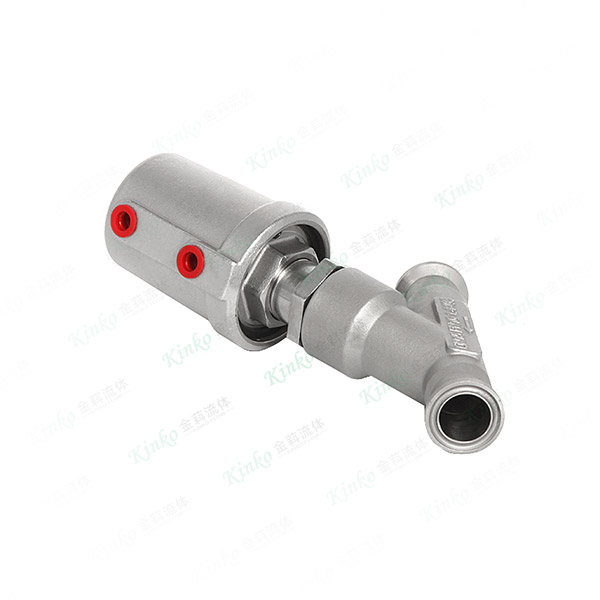
External Leakage (Leaks to Atmosphere)
Cause 1: Worn Stem O-Rings
Symptoms: Drip from weep hole between body and actuator.
Solution: Replace stem O-ring kit (20–30 minutes).
Warning: Small drip means replace within 1–2 weeks. Large leak means replace immediately.
Cause 2: Loose Union Nut
Symptoms: Leak at body-to-actuator joint.
Solution: Tighten union nut to spec (30–70 Nm depending on size). Do not overtighten.
Cause 3: Cracked Actuator Housing
Symptoms: Air leak from actuator body (hissing). Visible crack.
Solution: Replace actuator housing or entire actuator.
Cause 4: Damaged Piston Seal (Air Leak)
Symptoms: Continuous hissing from actuator, valve may not stroke fully.
Solution: Replace piston seal kit.
Diagnostic Flowchart (Text Version)
Step 1: Does leak stop when valve is open?
Yes → Internal leakage (seat problem)
No → External leakage (body or stem)
Step 2: For internal leakage – check pilot pressure
Below 4.5 bar → Increase pressure
Above 4.5 bar → Check debris or worn disc
Step 3: For external leakage – locate the source
Weep hole dripping → Stem O-rings
Body joint wet → Union nut or body crack
Actuator hissing → Piston seal or housing crack
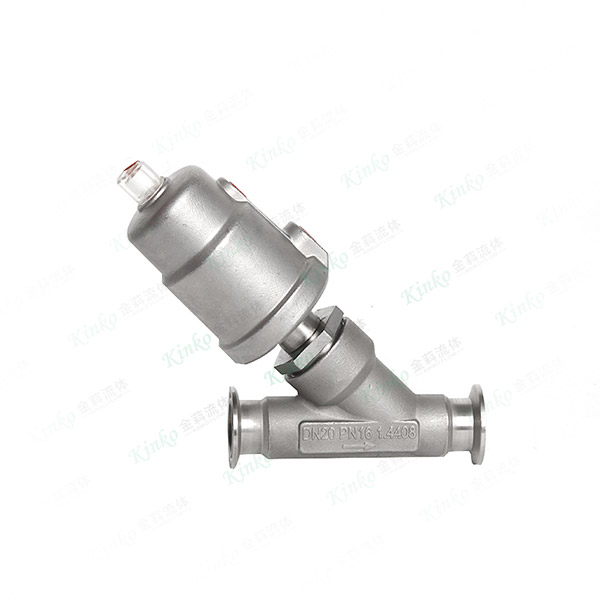
Quick Fixes Before Disassembly
| Symptom | Quick Fix | Permanent Fix |
|---|---|---|
| Sudden internal leak | Cycle valve 5–10 times rapidly | Install Y-strainer, replace disc |
| Slow leak from weep hole | Monitor weekly | Replace stem seals within 2 weeks |
| Valve chattering | Increase pilot pressure | Install pressure regulator |
| Slow actuation + leak | Clean or replace silencer | Replace silencer every 6 months |
When to Replace vs Repair
| Component | Replace | Repair |
|---|---|---|
| PTFE disc | Yes (in-line) | No |
| Stem O-rings | Yes (seal kit) | No |
| Valve seat (metal) | Replace entire body | No |
| Actuator piston seal | Yes (seal kit) | No |
| Cracked actuator housing | Yes (new actuator) | No |
| Solenoid pilot valve | Yes (new coil or valve) | Maybe (clean if clogged) |
Leakage Troubleshooting Table
| Problem | Likely Cause | Fix | Time |
|---|---|---|---|
| Valve leaks when closed | Worn PTFE disc | Replace disc | 10–15 min |
| Intermittent leak | Debris on seat | Cycle valve or clean | 5–15 min |
| Leak from first use | Wrong flow direction | Reverse valve | 10 min |
| Drip from weep hole | Worn stem O-rings | Replace seal kit | 20–30 min |
| Leak at body joint | Loose union nut | Tighten to spec | 5 min |
| Actuator hissing | Damaged piston seal | Replace seal kit | 30–45 min |
| Valve chatters + leaks | Low pilot pressure | Increase to 4.5 bar+ | 2 min |
| New disc still leaks | Damaged metal seat | Replace body | 30 min |
Prevention: Avoid Future Leaks
| Action | Prevents |
|---|---|
| Install Y-strainer upstream | Debris damage to seat |
| Maintain pilot pressure (4.5–8 bar) | Incomplete stroke, chatter |
| Replace seals proactively (every 2M cycles) | Catastrophic failure |
| Check weep hole weekly | Undetected stem seal wear |
| Use speed controllers for liquids | Water hammer damage |
| Support heavy pipes | Body distortion |
When to Call a Professional
Call Kinko technical support if:
New PTFE disc doesn't stop internal leak
Actuator housing is cracked
Valve body is warped or corroded
You've replaced seals twice in 6 months (underlying issue exists)
Kinko Support for Leaking Valves
Kinko provides:
Seal kits for all valve sizes (in stock)
Replacement PTFE discs (with glass or carbon filler)
Complete actuators and bodies
Technical support for diagnosis
Ivan (Mobile:+86-18968769287)
WhatsApp:+86-13579991606
Wechat:+86-18968769287
Website: www.kinko-flow.com
ZHEJIANG KINKO FLUID EQUIPMENT CO.,LTD

 info@kinko-flow.com
 +86-133 5611 9006