Tel:
Tel: E-Mail:
 English
 Chinese
 한국어
한국어
 Español




News
Quick Overview
| Feature | Angle Seat Valve | Ball Valve |
|---|---|---|
| Operation | Pneumatic (pilot air) | Manual, electric, or pneumatic |
| Best For | High cycling, steam, viscous media | On/off isolation, clean media |
| Flow Path | Angled body (reduces turbulence) | Straight through (full bore) |
| Seal Type | Piston + PTFE disc | PTFE or metal seats |
| Cycle Life | 2–5 million+ cycles | 50,000–200,000 cycles |
Detailed Comparison (8 Key Factors)
1. Flow Rate & Pressure Drop
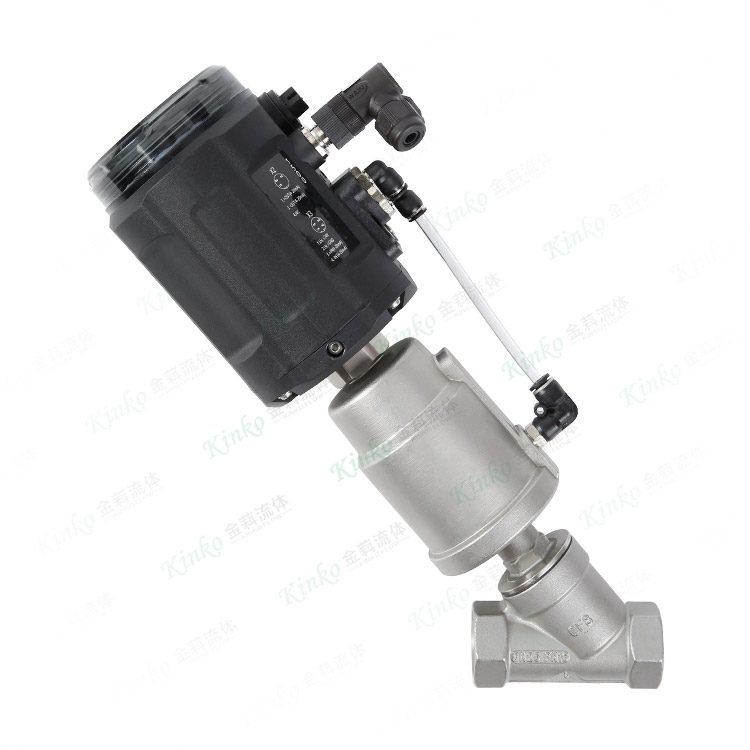
Angle Seat Valve: Angled body creates a smooth flow path with minimal turbulence. Low pressure drop, even at high flow rates.
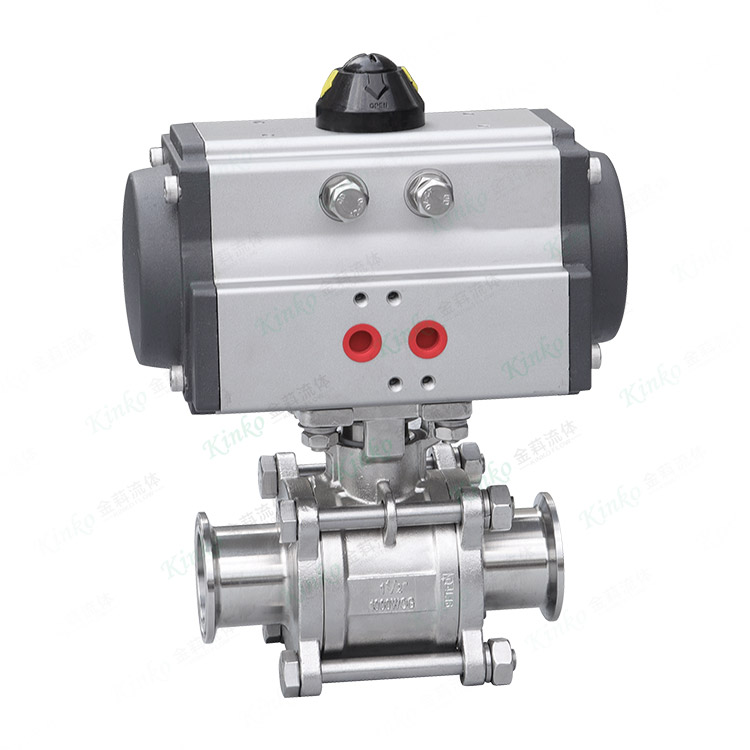
Ball Valve: Full bore design offers zero flow restriction when fully open. Slightly better than angle seat valves for maximum flow.
Winner: Ball valve (for full open flow), but angle seat valve is very close.
2. Cycling Frequency (Duty Cycle)
Angle Seat Valve: Designed for millions of cycles. Ideal for automated systems that open/close repeatedly (packaging, filling, CIP systems).
Ball Valve: Not meant for high cycling. Seats wear out quickly with frequent actuation.
Winner: Angle seat valve – by a large margin.
3. Media Type (Steam, Slurry, Viscous Fluids)
Angle Seat Valve: Self-cleaning design. Excellent for steam, hot water, oil, light slurries, and viscous media up to 600 cSt.
Ball Valve: Clean media only. Slurries or sticky fluids can accumulate in the ball cavity, causing jamming.
Winner: Angle seat valve for difficult media.
4. Shut-off (Leakage Rate)
Angle Seat Valve: PTFE disc seals tightly against the seat. Leakage rate: ANSI Class VI (bubble tight).
Ball Valve: Also bubble tight when new. However, seat wear over time increases leakage risk.
Winner: Tie (both offer tight shut-off when properly maintained).
5. Actuation & Control
Angle Seat Valve: Almost always pneumatic. Fast response (20–50ms). Requires compressed air supply.
Ball Valve: Can be manual (lever), electric (motorized), or pneumatic. Slower actuation unless equipped with a rack-and-pinion actuator.
Winner: Ball valve for flexibility; angle seat valve for speed.
6. Maintenance & Service Life
Angle Seat Valve: Simple design. Seal and piston can be replaced in minutes without removing the valve body from the pipeline.
Ball Valve: More complex. Seat replacement often requires removing the valve from the line. Labour-intensive.
Winner: Angle seat valve.
7. Cost (Initial Purchase)
Angle Seat Valve: Moderate cost. Stainless steel bodies with PTFE seals are affordable given the cycle life.
Ball Valve: Low cost for manual brass ball valves. Pneumatic ball valves are comparable to or slightly more expensive than angle seat valves.
Winner: Ball valve (for manual), tie (for automated).
8. Temperature Range
Angle Seat Valve: PTFE seals handle up to 180°C. Stainless steel bodies handle higher media temperatures.
Ball Valve: Standard PTFE seats up to 180°C. Metal-seated ball valves go higher but cost significantly more.
Winner: Tie for standard range; ball valve for extreme high temperature (metal seat option).
Decision Matrix: Which One Should You Choose?
| Application | Recommended Valve | Reason |
|---|---|---|
| High cycling (millions of operations) | Angle Seat Valve | Designed for frequent actuation |
| Steam or hot water | Angle Seat Valve | Self-draining, handles thermal shock |
| Viscous or dirty media | Angle Seat Valve | Self-cleaning, no cavity for debris |
| Infrequent on/off isolation | Ball Valve | Lower cost, simple manual operation |
| Full bore flow with zero restriction | Ball Valve | No pressure drop when open |
| Motorized / electric actuation | Ball Valve | Angle seat valves rarely available electric |
| Corrosive chemicals | Both (316L body) | Both available in stainless steel |
| Tight budget (manual) | Ball Valve | Lower upfront cost |
Technical Specifications Comparison Table (B2B Procurement)
| Parameter | Angle Seat Valve | Ball Valve |
|---|---|---|
| Size range | DN10 – DN100 (3/8" – 4") | DN6 – DN300+ (1/8" – 12") |
| Pressure range | 0 – 16 bar (0 – 232 psi) | 0 – 40 bar+ (0 – 580 psi+) |
| Temperature range | -10°C to +180°C (PTFE) | -20°C to +180°C (PTFE) |
| Body materials | 304/316L stainless steel, brass | 304/316L, brass, cast iron, PVC |
| Seal materials | PTFE, FKM, NBR | PTFE, PEEK, metal |
| Cycle life | 2–5 million | 50k–200k |
| Actuation options | Pneumatic only | Manual, electric, pneumatic |
| Response time | 20–50ms | 100ms–2 seconds |
| Flow coefficient (Kv) | High (angled body) | Highest (full bore) |
| Maintenance | Low (in-line seal change) | Moderate to high |
Common Misconceptions
"Ball valves are always better because they're more common."
Not true. For automated, high-cycle applications, angle seat valves last 10x longer.
"Angle seat valves can't handle high pressure."
Standard angle seat valves handle up to 16 bar (232 psi). High-pressure versions are available.
"Ball valves are cheaper to maintain."
False. Replacing ball valve seats requires line removal. Angle seat valve seals can be changed without disconnecting pipes.
Summary Recommendation
Choose an angle seat valve when:
Your system cycles frequently (hundreds or thousands of times per day)
Media is steam, hot water, viscous fluids, or light slurries
You need fast pneumatic actuation
Low maintenance and long service life are priorities
Choose a ball valve when:
The valve operates infrequently (manual isolation)
You need zero flow restriction (full bore)
Electric or motorized actuation is required
Budget is tight and manual operation is acceptable
Why Kinko for Both?
Kinko manufactures both pneumatic angle seat valves and pneumatic ball valves, allowing you to standardize on one supplier. Our product line includes:
Angle seat valves: 316L stainless steel, PTFE seals, 2–5 million cycles
Ball valves: Full bore, 304/316L, manual or pneumatic actuation
Custom threading: NPT, BSP, BSPT
Fast lead times for OEM and distributor orders
Ivan (Mobile:+86-18968769287)
WhatsApp:+86-13579991606
Wechat:+86-18968769287
Website:www.kinko-flow.com
ZHEJIANG KINKO FLUID EQUIPMENT CO.,LTD

 info@kinko-flow.com
 +86-133 5611 9006