Tel:
Tel: E-Mail:
 English
 Chinese
 한국어
한국어
 Español




News
Introduction: From Manual to Automated
Manual butterfly valves require operators to turn handwheels or levers. In modern industrial facilities—water treatment, chemical processing, power generation—manual operation is simply too slow, inaccurate, and labor-intensive.
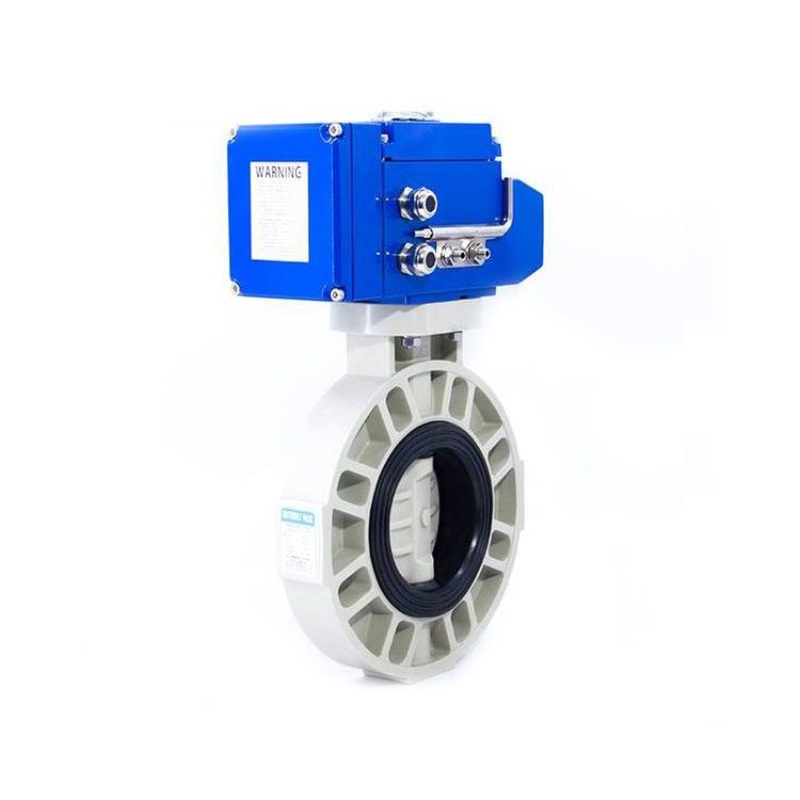
Automated butterfly valves pair a valve body with a pneumatic or electric actuator. The result: remote control, precise positioning, and integration with plant-wide control systems.
This guide covers the specific benefits of automation and why Kinko AT/AW series actuators deliver them.
Part 1: Six Core Benefits of Automation
| Benefit | Description | Impact |
|---|---|---|
| 1. Remote operation | Control valves from a central DCS or PLC | No field travel, safer |
| 2. Precise flow control | Modulating actuators (4-20mA) position disc anywhere from 0-100% | Better process quality |
| 3. High cycle capacity | Automated actuators cycle thousands of times daily | No operator fatigue |
| 4. Fail-safe operation | Spring-return actuators close or open on power/air loss | Plant safety |
| 5. Data feedback | Position feedback, cycle counts, torque alerts | Predictive maintenance |
| 6. Emergency response | Instant shutdown from control room | Reduced accident risk |
Part 2: Benefit Deep Dive
1. Remote Operation and Centralized Control
Automated butterfly valves connect to a distributed control system (DCS) or programmable logic controller (PLC). An operator at a single screen can monitor and adjust hundreds of valves.
Kinko implementation:
Kinko electric actuators accept 4-20mA or Modbus signals.
Kinko AT/AW pneumatic actuators pair with solenoid valves and positioners for remote air control.
Result: One operator manages an entire plant instead of walking miles of pipe racks daily.
2. Precise Modulating Flow Control
Manual valves offer only crude positioning. Automated modulating actuators position the disc with 0.5% accuracy.
Applications requiring modulation:
Chemical injection rates
Tank filling and blending
pH control loops
Temperature regulation in heat exchangers
Kinko recommendation: For modulating service, use Kinko electric actuators (4-20mA input) or Kinko AT pneumatic actuators with a precision positioner.
3. High Cycle Capability
Manual valves fatigue operators. A valve cycled 500 times per day requires an operator to turn a handwheel every 60 seconds. This is impractical and unsafe.
Automated actuators handle high cycles without complaint.
| Actuator | Maximum Recommended Cycles per Hour |
|---|---|
| Kinko AT pneumatic (rack and pinion) | 500 cycles/hour |
| Kinko AW pneumatic (scotch yoke) | 100 cycles/hour |
| Kinko electric (on/off) | 60 cycles/hour |
| Kinko electric (modulating) | 30 cycles/hour |
4. Fail-Safe Operation for Safety
When power or compressed air fails, an automated valve must move to a safe position.
Kinko fail-safe options:
| Actuator Series | Fail-Safe Type | Action on Air/Power Loss |
|---|---|---|
| Kinko AT-SR (spring-return pneumatic) | Mechanical spring | Closes or opens (specify when ordering) |
| Kinko AW-SR (spring-return scotch yoke) | Mechanical spring | Closes or opens |
| Kinko AT-DA (double-acting pneumatic) | None (holds position) | Stays in last position |
| Kinko electric with battery backup | Electrical | Closes or opens |
Critical applications requiring fail-safe: Emergency shutdown (ESD) systems, fire water lines, reactor feed lines, toxic chemical containment.
5. Data Feedback for Predictive Maintenance
Automated actuators provide real-time data that manual valves cannot.
Typical feedback signals (Kinko electric series):
Open/closed limit switch status
4-20mA analog position feedback
Torque or force output (on premium models)
Cycle counter
Motor temperature alert
How this reduces downtime: A gradually increasing torque reading indicates seat wear or debris buildup. Maintenance can schedule a seat replacement before the valve fails completely.
6. Emergency Response Speed
In a manual system, an operator runs to a valve and turns a handwheel. Response time: 2-10 minutes.
In an automated system, the control room pushes one button. Response time: 1-5 seconds.
Examples where speed matters:
Chemical leak containment
Overpressure protection
Reactor runaway prevention
Fire water deluge activation
Part 3: Industry-Specific Benefits
| Industry | Primary Benefit from Automation | Recommended Kinko Actuator |
|---|---|---|
| Water treatment | Remote operation, high cycles | Kinko electric or AT pneumatic |
| Wastewater | Fail-safe on chlorine lines | Kinko AT-SR (fail close) |
| Chemical processing | Precise modulation, data feedback | Kinko electric (4-20mA) |
| Oil and gas | Emergency shutdown, high torque | Kinko AW-SR (scotch yoke) |
| Food and beverage | Cleanability, washdown duty | Kinko AT-SS (stainless steel) |
| Power generation | High temperature, large bore | Kinko AW series |
| HVAC | Energy savings, scheduling | Kinko electric (24V AC) |
Part 4: Cost Justification – Is Automation Worth It?
The upfront cost of an automated valve (valve body + actuator + controls) is higher than a manual valve. However, total cost of ownership tells a different story.
| Cost Factor | Manual Valve | Automated Valve (Kinko) |
|---|---|---|
| Initial purchase cost | 100−500 | 500−2,500 |
| Labor for operation | Full-time operator | Zero (remote) |
| Process accuracy | Poor (±10%) | Excellent (±0.5%) |
| Waste from over/under flow | High | Low |
| Emergency response time | 2-10 minutes | 1-5 seconds |
| Data for maintenance | None | Real-time feedback |
| 5-year total cost | Higher | Lower |
Payback period: Most automated valve installations pay for themselves in labor savings alone within 6-18 months.
Part 5: Retrofitting Manual Valves to Automated
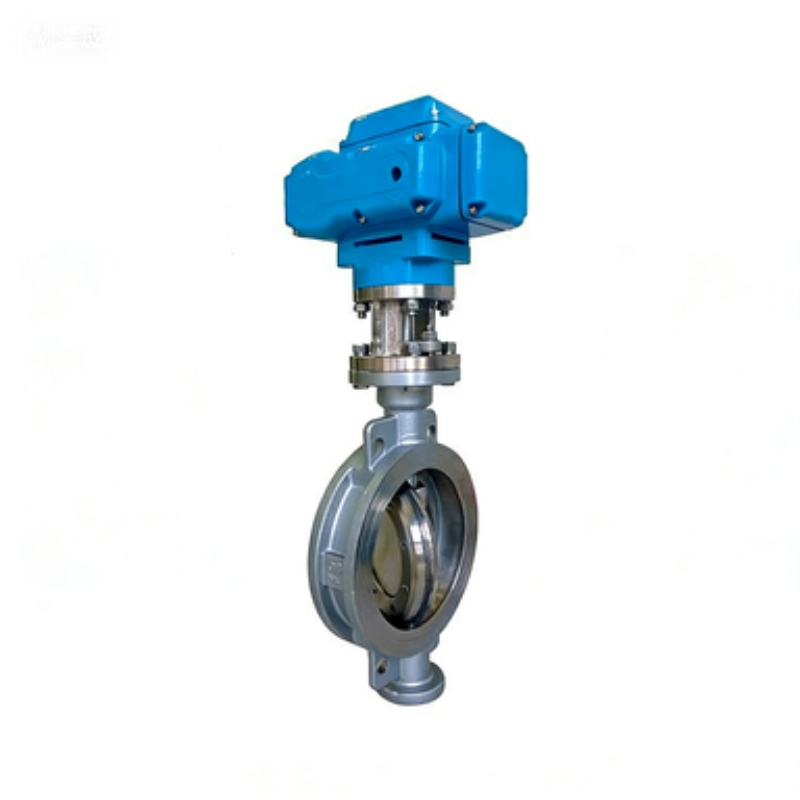
Existing manual butterfly valves can often be retrofitted with Kinko actuators.
Requirements for retrofit:
ISO 5211 mounting pad – The valve body must have standard mounting holes. Most Kinko butterfly valves include this from factory.
Adequate stem length – The actuator coupling must engage with the valve stem square drive.
Torque compatibility – The actuator must exceed valve break torque by 30%.
Kinko retrofit process:
Measure valve ISO 5211 flange pattern (F05, F07, F10, etc.)
Select matching Kinko AT, AW, or electric actuator.
Mount actuator using supplied bracket and coupling.
Connect power or air supply.
Set limit switches or travel stops.
Most retrofits take under one hour per valve.
Part 6: Kinko Automated Valve Packages
Kinko offers pre-assembled, tested automated butterfly valve packages for common applications.
| Package | Valve Type | Actuator | Control | Best For |
|---|---|---|---|---|
| K-AT-PKG | Wafer, EPDM seat | Kinko AT-DA pneumatic | Solenoid valve, 3/2 way | On/off, high cycle |
| K-AT-SR-PKG | Wafer, PTFE seat | Kinko AT-SR spring-return | Solenoid valve, 5/2 way | Fail-safe applications |
| K-AW-PKG | Lug type, metal seat | Kinko AW scotch yoke | Pilot valve | Large bore, high torque |
| K-ELEC-PKG | Wafer, EPDM seat | Kinko electric | 4-20mA modulating | Precise flow control |
| K-EX-PKG | Wafer, PTFE seat | Kinko AT-SR (ATEX) | Explosion-proof solenoid | Hazardous areas |
Each package is factory-tested for torque, seat leakage, and cycle operation before shipment.
Conclusion: Automation Is No Longer Optional
Modern industry demands efficiency, safety, and data. Manual butterfly valves cannot deliver these requirements at scale.
Automated butterfly valves with Kinko AT/AW pneumatic or electric actuators provide:
Remote operation from a control room
Precise modulating control within 0.5%
Fail-safe action for emergency response
Real-time feedback for predictive maintenance
Payback within 6-18 months
Whether retrofitting existing valves or specifying new installations, Kinko offers a complete range of ISO 5211-compliant actuators for any application.
Ivan (Mobile:+86-18968769287)
WhatsApp:+86-13579991606
Wechat:+86-18968769287
Website:www.kinko-flow.com
ZHEJIANG KINKO FLUID EQUIPMENT CO.,LTD

 info@kinko-flow.com
 +86-133 5611 9006