Tel:
Tel: E-Mail:
 English
 Chinese
 한국어
한국어
 Español




News
Feature 1: Cast 316L Stainless Steel Body
Why it matters: The body must withstand pressure spikes, thermal cycling, and corrosive media without cracking or pitting.
What low-quality valves use:
Cast CF8 (304 equivalent) – lower corrosion resistance
Brass – fails in acidic or high-temperature applications
Recycled stainless steel – inconsistent composition
What high-quality valves use:
Cast CF8M (316L equivalent) or forged 316L
Low carbon content (0.03% max) prevents weld decay
Nickel content 10–14% for corrosion resistance
Molybdenum 2–3% for chloride resistance
How to verify: Request material test report (MTR) or mill certificate.
Feature 2: PTFE Seal
Why it matters: Pure PTFE deforms under pressure (cold flow). Fillers improve mechanical strength without sacrificing chemical resistance.
What low-quality valves use:
Virgin PTFE (deforms quickly)
Recycled PTFE (inconsistent performance)
Thin disc (wears through rapidly)
What high-quality valves use:
| Filler Type | Benefit | Best For |
|---|---|---|
| 15% Glass fiber | Increased wear resistance | General industrial |
| 25% Carbon | Excellent thermal conductivity | High cycling, steam |
| 15% Graphite | Low friction, chemical resistant | Aggressive chemicals |
| Bronze powder | High pressure capability | Hydraulic applications |
How to verify: Ask for seal material composition specification.
Feature 3: Self-Lapping Seat Design
Why it matters: Each valve closure should improve the seal, not degrade it.
What low-quality valves lack:
Hard seat surfaces that wear rather than polish
Misaligned disc-to-seat contact
No provision for wear compensation
What high-quality valves include:
PTFE disc that conforms to metal seat under pressure
Precision-ground 316L seat (Ra ≤ 0.4µm finish)
Disc design that rotates slightly with each cycle (distributes wear)
Result: Leakage decreases during the first 10,000 cycles, then remains stable for millions more.
How to verify: Ask for cycle test data showing leakage rate over time.
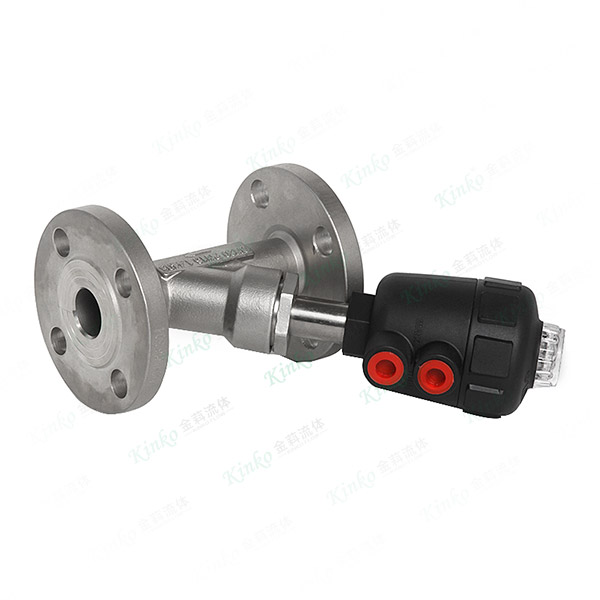
Feature 4: Visual Position Indicator
Why it matters: Operators and maintenance staff need to know valve status at a glance.
What low-quality valves offer:
No indicator (blind cap)
Small indicator that's hard to see from a distance
Indicator that falls off or fades
What high-quality valves include:
Large, bright indicator (yellow/green/red)
Visible from 10+ meters
Protected against washdown (IP65 or IP67)
Mechanical stop prevents indicator rotation
Indicator colors standard:
Retracted (valve closed NC) = Green or indicator flush
Extended (valve open NC) = Red or indicator raised
How to verify: Check if indicator is standard or an extra-cost option.
Feature 5: Double O-Ring Stem Sealing
Why it matters: A single O-ring is a single point of failure. When it leaks, media enters the actuator or escapes to atmosphere.
What low-quality valves use:
Single O-ring
No weep hole (leak goes unnoticed until catastrophic)
How to verify: Check parts diagram for double O-ring configuration.
Feature 7: IP65 or IP67 Actuator Protection
Why it matters: Industrial environments expose valves to water, dust, and washdown chemicals.
What low-quality valves use:
IP54 (splash resistant only)
No protection against hose-down
Vents that allow moisture entry
IP Rating explained for angle seat valves:
| IP Rating | Dust Protection | Water Protection | Suitable For |
|---|---|---|---|
| IP54 | Limited dust ingress | Splashing water | Indoor, dry areas |
| IP65 | Dust-tight | Low-pressure jets | Most industrial |
| IP66 | Dust-tight | High-pressure jets | Washdown areas |
| IP67 | Dust-tight | Temporary immersion | Outdoor, wet environments |
What high-quality valves include:
IP65 or IP67 as standard
Anodized aluminum actuator (corrosion resistant)
Sealed exhaust port (accepts tubing to remote location)
How to verify: Check datasheet for IP rating certification.
Feature 8: High Cycle Life Rating (2–5 Million Cycles)
Why it matters: Cycle life directly impacts total cost of ownership. Frequent replacement costs far more than the valve itself.
What low-quality valves claim:
"Long life" (no specific number)
200,000–500,000 cycles (typical for ball valves)
No third-party validation
What high-quality valves provide:
| Valve Size | Standard Cycle Life | With Upgrade |
|---|---|---|
| DN10 – DN25 | 3–5 million cycles | 7+ million |
| DN32 – DN50 | 2–3 million cycles | 5 million |
| DN65 – DN100 | 1–2 million cycles | 3 million |
How to verify: Request cycle test report from independent lab or manufacturer's test rig.
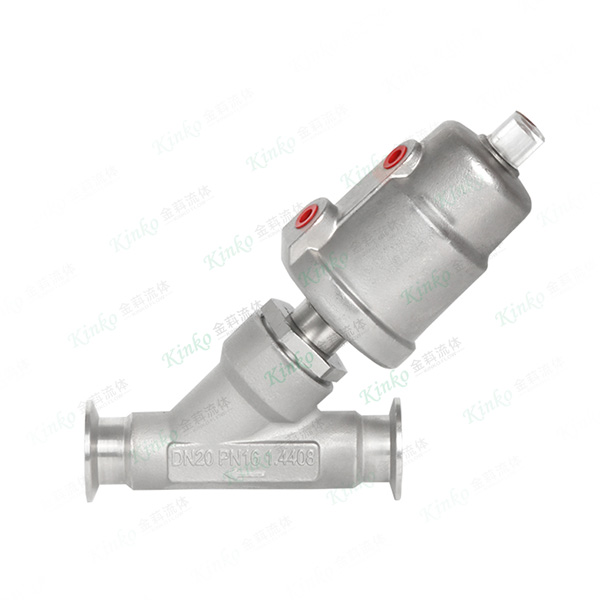
Feature 9: Wide Temperature Range
Why it matters: Many applications involve steam (up to 180°C) or outdoor freezing conditions.
What low-quality valves offer:
Narrow range (e.g., -5°C to +120°C)
Different seal materials required for hot/cold
No Low temperature option
What high-quality valves include:
| Seal Material | Media Temperature | Ambient Temperature |
|---|---|---|
| PTFE | -10°C to +180°C | -10°C to +60°C |
| PTFE + low-temp mod | -30°C to +180°C | -30°C to +60°C |
How to verify: Check datasheet for both media and ambient temperature ranges.
Feature 10: Easy In-Line Maintenance
Why it matters: Removing a valve from the pipeline for seal replacement costs hours of downtime.
What low-quality valves require:
Full valve removal from line
Special tools for disassembly
Replacement of entire valve (seals not available separately)
What high-quality valves offer:
| Maintenance Task | Time Required | Tools Needed |
|---|---|---|
| Replace PTFE disc | 10–15 minutes | Hex key, wrench |
| Replace stem O-rings | 20–30 minutes | Snap ring pliers |
| Replace actuator piston seal | 30–45 minutes | Hex key set |
| Full actuator rebuild | 45–60 minutes | Basic hand tools |
Key requirement: All maintenance must be possible with the valve body still bolted to the pipeline.
How to verify: Ask for maintenance instruction manual before purchasing.
Feature Comparison Table: Low Quality vs High Quality
| Feature | Low-Quality Valve | High-Quality Valve (Kinko Standard) |
|---|---|---|
| Body material | Cast CF8 (304) or brass | Cast CF8M (316L) |
| Seal type | Virgin PTFE, thin | PTFE + glass fiber |
| Seat finish | As-cast (rough) | Ground (Ra ≤ 0.4µm) |
| Position indicator | None or small | Large, yellow, IP67 |
| Stem seals | Single O-ring | Double O-ring + weep hole |
| Actuator rotation | Fixed | 360° rotatable |
| IP rating | IP54 | IP65 (standard) |
| Cycle life claim | "Long life" | 3–5 million cycles |
| Temperature range | -5°C to +120°C | -10°C to +180°C |
| In-line maintenance | No (remove valve) | Yes (10–15 minutes) |
| Spare parts availability | Unavailable | Full seal kits in stock |
| Material certification | No | MTR available |
Red Flags to Avoid When Buying
Missing documentation:
No material test report (MTR)
No cycle life test data
No IP rating certification
Vague specifications:
"High quality" without numbers
"Long life" without cycle count
"Stainless steel" without grade (304 vs 316L)
Unusually low price:
Below market by 40%+ indicates material substitution
Example: Brass instead of 316L, virgin PTFE instead of filled PTFE
No spare parts:
Manufacturer doesn't sell seal kits
Requires full valve replacement for minor wear
No technical support:
No installation manual
No dimensional drawings
No contact for application questions
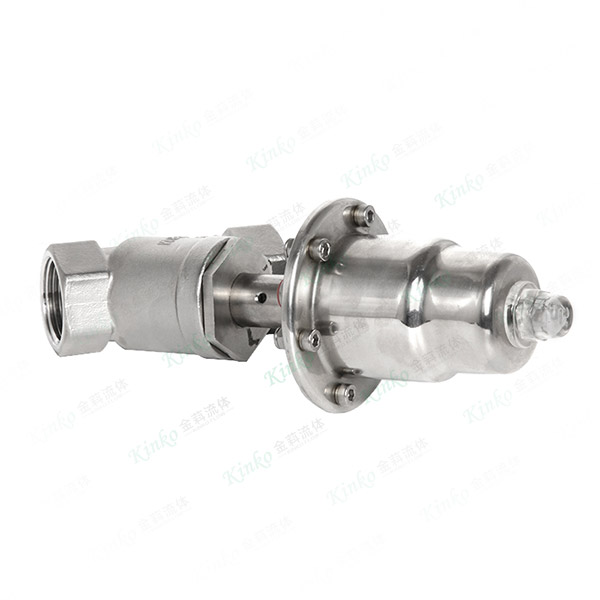
Kinko High-Quality Features Summary
Kinko industrial pneumatic angle seat valves include all 10 features as standard:
| # | Feature | Kinko Specification |
|---|---|---|
| 1 | Body material | CF8M (316L) stainless steel |
| 2 | Seal type | PTFE + 15% glass fiber |
| 3 | Seat design | Self-lapping, ground finish |
| 4 | Position indicator | Large yellow indicator, IP67 |
| 5 | Stem sealing | Double O-ring (FKM) + weep hole |
| 6 | Actuator rotation | 360° with locking graduations |
| 7 | Protection class | IP65 standard, IP67 optional |
| 8 | Cycle life | 3–5 million cycles |
| 9 | Temperature range | -10°C to +180°C (PTFE) |
| 10 | In-line maintenance | Yes, 10–15 minutes |
Additional benefits:
100% factory bubble-tested
Full material traceability
Seal kits available for 10+ years
OEM private labeling available
Ivan (Mobile:+86-18968769287)
WhatsApp:+86-13579991606
Wechat:+86-18968769287
Website: www.kinko-flow.com
ZHEJIANG KINKO FLUID EQUIPMENT CO.,LTD

 info@kinko-flow.com
 +86-133 5611 9006